
Introduction
Understanding the plumbers insurance cost is essential for any plumbing business owner. Without the right insurance, one accident or lawsuit could sink your business.
For a quick answer:
- Average Cost for General Liability Insurance: $500 – $1,500 per year
- Factors Influencing Cost: Business size, location, claims history, etc.
Insurance is not just about compliance—it’s about protecting your livelihood. Plumbers face daily risks, from property damage to accidents. Without the right coverage, the financial consequences can be severe.
Reliant Insurance Group specializes in providing insurance solutions tailored to the plumbing industry. We’ll guide you through the complexities of insurance, making sure you get the right coverage without breaking the bank.
Types of Plumbers Insurance
When running a plumbing business, having the right insurance coverage is crucial. Different types of insurance protect you from various risks and liabilities. Here’s a breakdown of the essential types of plumbers insurance:
General Liability
General Liability Insurance is the backbone of any plumbers insurance policy. It covers you if you accidentally cause property damage or bodily injury to a third party while on the job.
Example: Suppose a customer trips over a pipe you left on the floor and injures themselves. General liability insurance would cover the medical expenses and any legal fees if they decide to sue.
Workers’ Compensation
Workers’ Compensation Insurance is mandatory if you have employees. It protects you by covering medical expenses and lost wages if an employee gets injured or sick due to their job.
Example: An employee gets hurt while installing a water heater. Workers’ compensation will cover their medical bills and part of their lost wages during recovery.
Tools & Equipment
Tools & Equipment Insurance protects your essential tools from theft, loss, or damage.
Example: Your tool van is broken into, and your expensive plumbing tools are stolen. This insurance helps replace those tools so you can get back to work quickly.
Commercial Property
Commercial Property Insurance covers the physical assets of your business, like your office space, storage buildings, and their contents.
Example: A fire damages your office. Commercial property insurance would cover the cost of repairs and replacing damaged equipment.
Professional Liability
Professional Liability Insurance (also known as Errors & Omissions) covers you if a client claims you made a mistake in your work that caused them financial loss.
Example: You install a plumbing system incorrectly, causing water damage to a client’s property. Professional liability insurance would cover the costs related to fixing the mistake and any legal fees.
Commercial Auto
Commercial Auto Insurance is essential if you use vehicles for your business. It covers accidents, theft, and damage to your work vehicles.
Example: You get into an accident while driving to a job site. Commercial auto insurance would cover the repair costs and medical expenses.
Surety Bonds
Surety Bonds are often required for licensing or specific projects. They guarantee that you will fulfill your contractual obligations.
Example: Before starting a large commercial project, the client requires a surety bond to ensure you complete the job as agreed. If you fail to meet the terms, the bond compensates the client.
Understanding these types of insurance can help you make informed decisions about protecting your plumbing business. Next, we’ll dive into the factors that influence plumbers insurance cost and what you can expect to pay for each type of coverage.
Factors Influencing Plumbers Insurance Cost
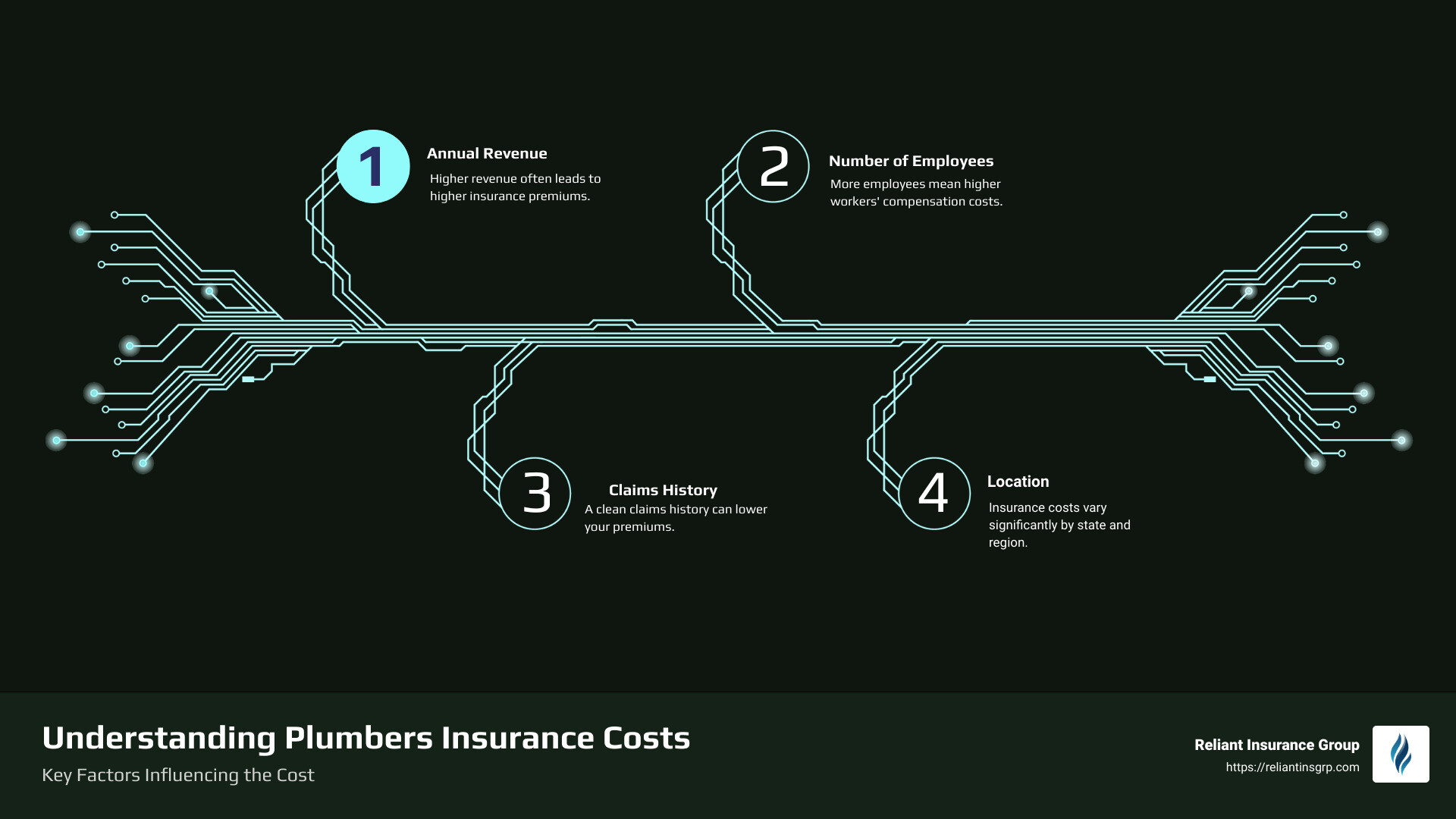
Understanding the factors that influence plumbers insurance cost can help you anticipate expenses and budget accordingly. Here are the main elements insurers consider:
Annual Revenue
Higher gross revenues mean more projects, larger contracts, and increased complexity. This translates to higher premiums. For instance:
- Small Business: A solo operator with $150,000 annual revenue may pay lower premiums.
- Large Business: A seven-figure contractor faces significantly higher premiums.
Number of Employees
More employees mean greater risk exposure for general liability and workers’ compensation. Each additional plumber increases the chances of accidents, injuries, and claims.
- Sole Proprietor: Lowest premiums.
- 10+ Employees: Significant premium jumps.
Claims History
Your track record with prior claims impacts your premiums. Too many claims make you a riskier bet, resulting in steep hikes. A clean history helps keep premiums affordable.
- Clean History: Lower premiums.
- Frequent Claims: Higher premiums.
Location
Geographic location affects premiums due to crime rates, weather patterns, population density, and local construction characteristics.
- Rural Areas: Insurance costs may be 10-15% lower.
- Urban Areas: Higher premiums due to increased risks.
Liability Limits
The coverage limits you choose significantly influence your premiums. Higher limits offer better protection but come at a higher cost.
- Minimum Recommended: $1 million per occurrence and $2 million aggregate.
- Umbrella Policies: Increase costs but provide extensive coverage.
Years in Business
New startups pay higher premiums until they build a track record over 3-5 years. Established businesses with a successful history enjoy lower rates.
- New Business: Higher initial premiums.
- Established Business: Lower premiums over time.
Nature of Your Projects
The complexity and risk level of your plumbing jobs impact your liability risk. Hazardous commercial work on large projects incurs higher premiums than residential service calls.
- Commercial Work: Higher premiums.
- Residential Work: Lower premiums.
State Regulations
Different states have unique laws and regulations that determine minimum insurance requirements for contractors. Indiana’s modest requirements help keep base premiums affordable, but sufficient coverage is still crucial.
- Indiana: Relatively modest requirements.
- Other States: Varying requirements that can affect costs.
Understanding these factors can help you better anticipate and manage your plumbers insurance cost. Next, we’ll explore the average costs for different types of plumbing insurance coverage.
Average Costs of Plumbers Insurance
When it comes to plumbers insurance cost, understanding the average expenses for various types of coverage can help you budget effectively. Here’s a breakdown of what you might expect to pay:
General Liability Insurance
General liability insurance is crucial for plumbers, covering property damage and injuries to third parties. On average, plumbing businesses pay about $115 per month or $1,378 annually for this coverage. This policy can protect you from costs associated with accidents like a customer tripping over your tools and getting injured.
Business Owner’s Policy (BOP)
A Business Owner’s Policy (BOP) bundles general liability and commercial property insurance, often at a discounted rate. Plumbers typically pay around $166 per month or $1,992 annually for a BOP. This policy is ideal for small, low-risk businesses and can cover common lawsuits and property damage.
Workers’ Compensation Insurance
Given the physical nature of plumbing work, workers’ compensation insurance is essential. It covers medical costs and lost wages if an employee gets injured on the job. The average cost for plumbers is about $195 per month or $2,337 annually. This policy is usually mandatory and can vary based on the number of employees and the type of work they do.
Commercial Auto Insurance
If you use vehicles for your plumbing business, commercial auto insurance is necessary. This covers accidents involving your business vehicles. On average, plumbers pay around $225 per month or $2,704 annually. This cost depends on factors like the value of your vehicles and your claims history.
Tools & Equipment Insurance
Your tools are essential for your work, and tools & equipment insurance can protect them from loss, damage, or theft. The average cost for this coverage is about $19 per month or $224 annually. This relatively low cost is a small price to pay for peace of mind.
Professional Liability Insurance
Professional liability insurance, also known as errors and omissions (E&O) insurance, covers legal costs if a client claims your work was incomplete or shoddy. This is particularly important for plumbing contractors who provide specialized services. Costs can vary, but having this coverage can save you significant amounts in potential legal fees.
Commercial Umbrella Insurance
For additional protection beyond the limits of your other policies, commercial umbrella insurance is a good option. It provides extra liability coverage and can be crucial for larger businesses or those working on high-risk projects. The cost of this insurance varies widely based on the amount of additional coverage you need.
Surety Bonds
Lastly, surety bonds are often required to guarantee that you will fulfill your contractual obligations. The cost for surety bonds is relatively low, averaging around $100 annually. This can vary based on the size and scope of the projects you undertake.
Understanding these average costs can help you plan your budget and ensure you have the necessary coverage to protect your plumbing business. Next, we’ll discuss how to get a plumbers insurance quote efficiently.
How to Get a Plumbers Insurance Quote
Getting a quote for plumbers insurance doesn’t have to be complicated. Here’s a step-by-step guide to help you navigate the process efficiently.
Online Instant Quote
The fastest way to get a plumbers insurance quote is by using an online instant quote tool. Many insurance providers, including Reliant Insurance Group, offer this service. You simply fill out a form with basic information about your business, such as:
- Business name and location
- Number of employees
- Annual revenue
- Types of services offered
Within minutes, you can receive a quote tailored to your needs. This method saves time and allows you to quickly compare different policies.
Comparing Quotes
It’s always a good idea to compare quotes from multiple providers. This helps ensure you’re getting the best coverage at the best price. While Reliant Insurance Group offers competitive rates, it’s beneficial to see what other options are available. Look at the details of each quote, including:
- Coverage limits
- Deductibles
- Premium costs
- Additional benefits
Insureon
One platform you might find useful for comparing quotes is Insureon. It specializes in small business insurance and can provide multiple quotes from different insurers. This makes it easier to compare and choose the best policy for your plumbing business.
Coverage Options
When reviewing quotes, pay close attention to the coverage options. Essential coverages include:
- General Liability Insurance: Covers property damage and bodily injury to third parties.
- Workers’ Compensation: Covers medical costs and lost wages for employees injured on the job.
- Tools & Equipment: Protects your tools against loss, damage, or theft.
- Commercial Property: Covers your business location and equipment.
- Professional Liability: Protects against claims of negligence or faulty work.
Policy Limits
Policy limits are the maximum amount an insurer will pay for a covered loss. Higher limits offer more protection but usually come with higher premiums. Consider the size and scope of your projects when choosing your limits. For example, a small plumbing business might opt for a $1 million limit, while a larger company might need $2 million or more.
Deductibles
A deductible is the amount you pay out of pocket before your insurance kicks in. Higher deductibles can lower your premium but mean more out-of-pocket costs if you file a claim. Balance your deductible with what you can afford to pay in case of an incident.
By following these steps, you can efficiently get a plumbers insurance quote that fits your business needs. Next, we’ll look at tips for reducing your plumbers insurance cost.

Tips for Reducing Plumbers Insurance Cost
Running a plumbing business can be costly, but there are several ways to keep your plumbers insurance cost manageable. Here are some practical tips:
Risk Management
Effective risk management can significantly lower your insurance premiums. This involves identifying potential risks and implementing measures to mitigate them. For instance, regular maintenance of equipment and vehicles can prevent accidents and breakdowns, reducing the likelihood of claims.
Safety Protocols
Implementing robust safety protocols is crucial. Ensure your employees are well-trained to handle tools and materials safely. Regular safety drills and providing personal protective equipment (PPE) can reduce workplace injuries. According to the National Council on Compensation Insurance (NCCI), safer workplaces often result in lower workers’ compensation premiums.
Clean Claims History
A clean claims history can make a big difference. Insurers look at your past claims to assess risk. Fewer claims generally mean lower premiums. Encourage employees to follow safety guidelines and report potential hazards before they become claims.
Bundling Policies
Bundling policies can lead to discounts. Many insurers offer reduced rates if you purchase multiple types of coverage from them. For example, combining general liability, commercial auto, and workers’ compensation can be more cost-effective than buying each separately.
Reviewing Coverage Regularly
Review your coverage regularly to ensure you’re not over-insured or under-insured. As your business grows or changes, your insurance needs will too. Regularly reassessing your policies with an agent can help you adjust coverage and find savings.
By following these tips, you can effectively manage and reduce your plumbers insurance cost. Next, we’ll address some frequently asked questions about plumbers insurance.
Frequently Asked Questions about Plumbers Insurance Cost
What is the average cost of plumbers insurance?
The average cost of plumbers insurance can vary widely based on several factors such as location, business size, and coverage limits. On average, a business owner’s policy (BOP), which bundles general liability and property insurance, costs around $166 per month. General liability insurance alone typically costs about $1,378 per year.
For more specific coverage types:
- Commercial auto insurance averages $2,704 per year.
- Workers’ compensation insurance costs around $2,337 per year.
- Contractor’s tools and equipment insurance is about $224 per year.
These prices can fluctuate based on the specifics of your business, so it’s best to get a tailored quote.
How can I lower my plumbers insurance premiums?
Lowering your plumbers insurance premiums involves a few smart strategies:
-
Risk Management: Implement safety protocols and training programs to reduce the likelihood of accidents. Insurers often offer discounts to businesses with documented safety measures.
-
Clean Claims History: Maintaining a history free of claims can significantly reduce your premiums. Insurers view businesses with fewer claims as lower risk.
-
Bundling Policies: Combining multiple policies, such as general liability, commercial auto, and workers’ compensation, into a single BOP can be more cost-effective.
-
Higher Deductibles: Choosing higher deductibles can lower your monthly premiums. However, ensure you can afford the deductible amount in case of a claim.
-
Comparing Quotes: Don’t settle for the first quote you receive. Compare quotes from different insurers to find the best deal.
What coverage limits should I choose for my plumbing business?
Choosing the right coverage limits depends on several factors:
-
Business Size: Larger businesses with more employees and higher revenues typically need higher coverage limits.
-
Project Nature: If you work on high-risk projects, such as commercial buildings or public infrastructure, you may need higher limits to cover potential claims.
-
State Regulations: Some states have minimum insurance requirements for plumbing businesses. Ensure your coverage meets or exceeds these mandates.
- Liability Limits: Standard liability limits for general liability insurance are often $1 million per occurrence and $2 million aggregate. However, assess your specific risks to determine if higher limits are necessary.
By understanding these factors, you can choose adequate coverage to protect your business without overpaying.
Next, we’ll delve into the process of obtaining a plumbers insurance quote and what to expect during that process.
Conclusion
Having the right plumbers insurance is essential for protecting your business from financial ruin. Without adequate coverage, one accident, lawsuit, or disaster could devastate your finances and reputation. It’s not just about meeting legal requirements; it’s about ensuring your business can continue to operate smoothly, no matter what happens.
At Reliant Insurance Group, we understand the unique challenges faced by plumbing professionals. We specialize in providing tailored insurance solutions that fit your specific needs. Our goal is to help you secure the best coverage at the most competitive pricing.
By partnering with us, you gain access to:
- Expert Guidance: We help you navigate the complexities of insurance policies, ensuring you get the coverage you need.
- Competitive Pricing: We work with multiple carriers to find the best rates for your business.
- Tailored Solutions: Our policies are customized to fit the unique risks associated with the plumbing industry.
Don’t leave your business vulnerable. Invest in comprehensive plumbers insurance and gain peace of mind knowing you’re protected.
For more information or to get a personalized quote, visit our Plumbing Contractor Insurance page.